











Keynotes · breakouts · workshops

Built for your room.

Not off the shelf.

Funny first, honest underneath. Every talk gets shaped around one question, and it isn't what Steve feels like saying. It's what your audience needs to know, do and feel by the time they walk out.

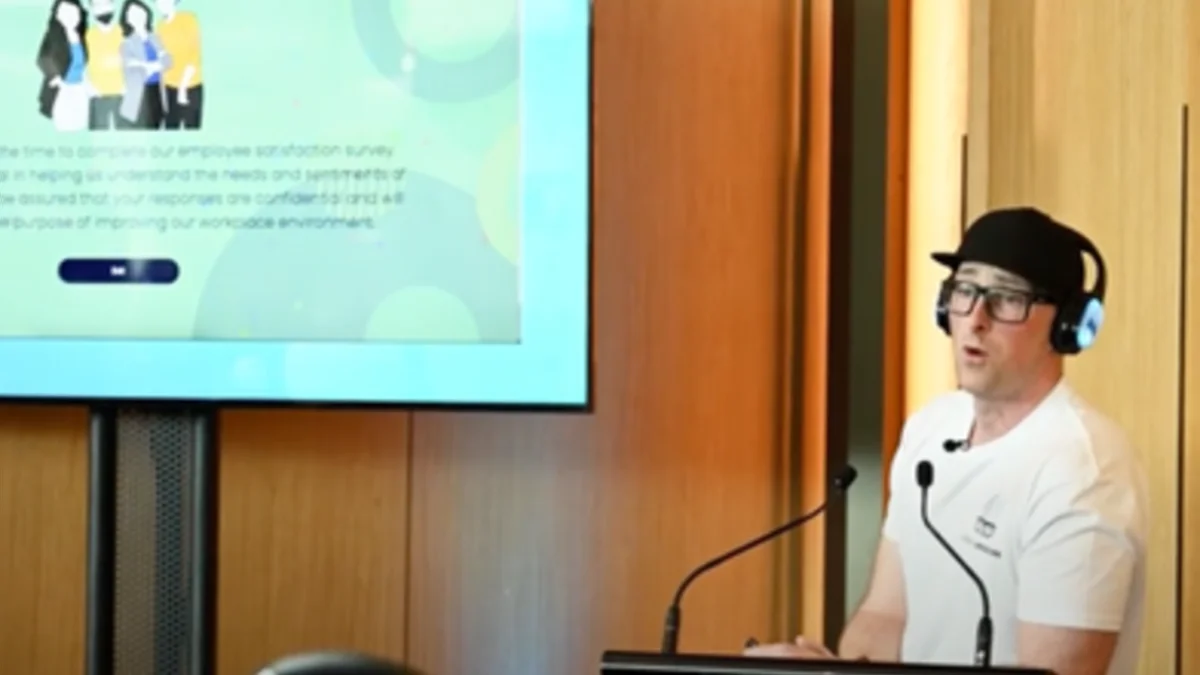
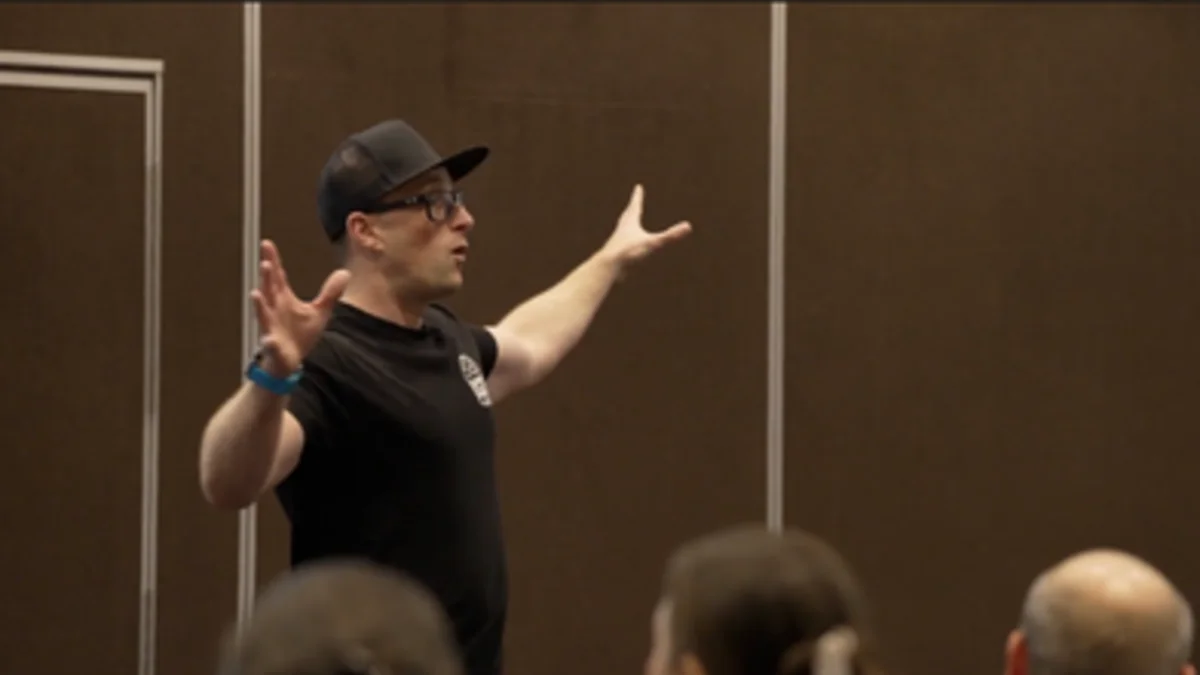
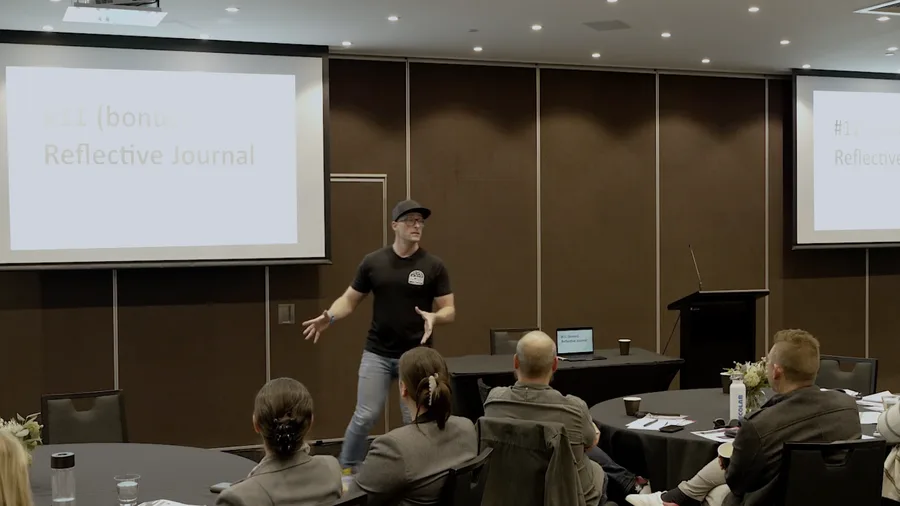
Steve mid-explanation, pointing to make a point.

How every talk gets built

In service to the room, not performing at it.

Before a word gets written, Steve asks you three things. The whole talk is then built backwards from your answers, which is why no two versions of the same talk are ever the same.

Know

What does your audience need to understand by the end that they didn't when they sat down?

Do

What do you need them to actually go and do on Monday? Not feel inspired about. Do.

Feel

How does the room need to feel walking out, and how does that serve the rest of your event?

The aim is something magical and memorable that they're still acting on a fortnight later. Applause is nice. Monday is the measure.

The range

Nine talks. Or one built from scratch for your brief.

Three signatures do the heavy lifting. The rest come out when a room needs something specific. Open any of them for the outcome, the takeaways and who it's for.

The outcome

People stop waiting to feel ready and back themselves on the thing they've been circling for months.

They walk out with

  • How to tell a real risk from a scary one
  • What to have covered before you jump, and what you can work out on the way
  • The smallest yes they can say this week
  • Permission to be rubbish at the start
  • Where it ends up — saying yes turns into passing it on

The story it's built on

Steve was twenty-two and about to quote a thousand dollars for a week of workshops he'd never run. The bloke across the table said “you mean twenty, right?” He said yes, then went away and made himself worth it.

For · rooms sitting on a decision, teams pushing to a new level, young professionals30–60 minKeynote or breakout

The outcome

People stop trying to be good at everything and work out which few things actually deserve them.

They walk out with

  • Their own grid filled in, off two questions — does it matter, and do you rock at it? Rock, the Ego Trap, the Choice Point, Happy Suck.
  • The five Do moves: do enough to not suck · know enough to not get played · get AI to carry the weight · pay someone who rocks · turn the odd suck into a rock
  • One thing they're handing over this month, and permission to feel fine about it
  • The thing they're brilliant at that they should stop doing anyway

The story it's built on

Steve was twenty-one and drowning. He could swim, but he sucked in the ocean, and a lifeguard who rocked it pulled him out. He had a choice — stay scared of the ocean or get good at it — and he was a lifeguard himself the next season, for eight years. Nobody has to rock the ocean. You just have to do enough to not drown. What took another fifteen years was admitting he couldn't do that with everything. Rock or suck was binary, asking for help wasn't on the list, and it cooked him.

For · anyone carrying the belief they have to be good at everything30–90 minKeynote or workshop

The outcome

A room that goes quiet, then goes home and actually records something for someone. People have come back months later to say they finally did it.

They walk out with

  • Why what you know disappears faster than anyone thinks
  • The three questions that turn a life event into something worth passing on — why did it matter, what did you learn, what could you teach?
  • Why voice and video beat letters and text, and it isn't close
  • Ten minutes a week, and the simplest possible way to start

The story it's built on

Steve was twelve, singing along in the car on the way to school, when the light went red and he saw the lump on his dad's forearm. His dad called him back across the car park, got down on one knee and told him the cancer was back. One week later he was gone. What he left his two boys was a cassette recorded in a hurry — thirteen minutes and twenty seconds out of a twenty-two-million-minute life.

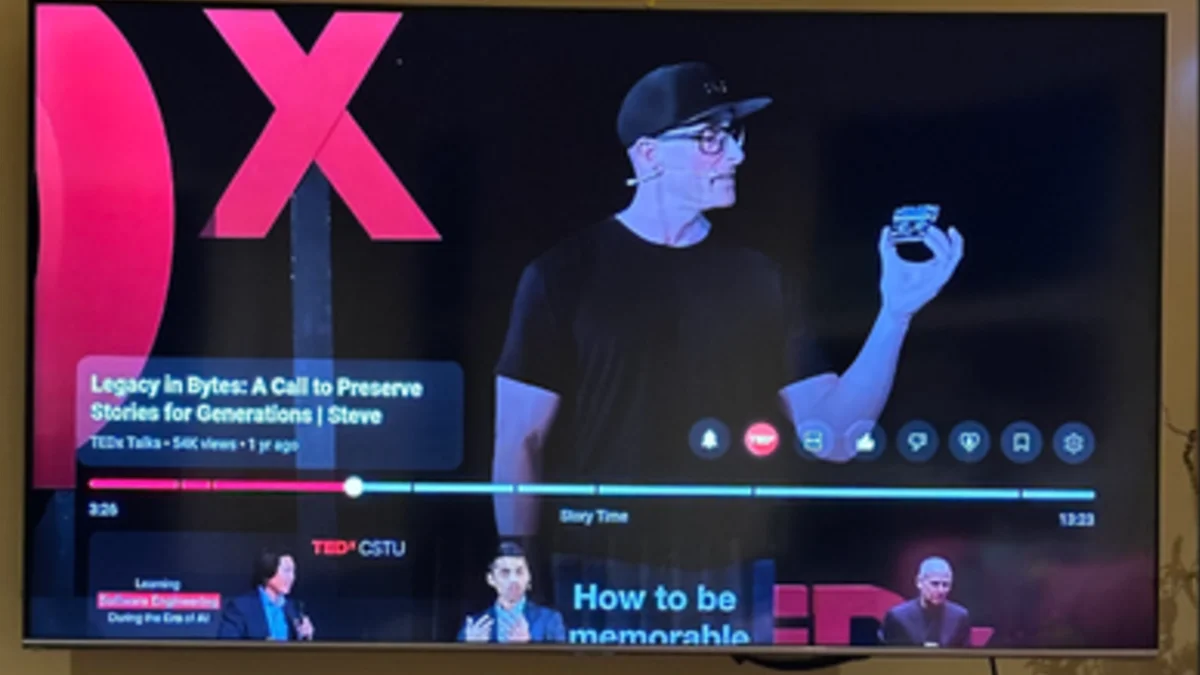
For · conferences, leadership rooms, community and member events13 min as the TEDx · 30–45 extendedThe TEDx · 55k views

The outcome

Owners find the exact places the business stops without them, and leave knowing the first one to fix. Not burn it down — build it so it can run when they can't.

They walk out with

  • An honest count of what their door costs them
  • The points where everything stops if they're not there, named out loud
  • What to systemise or hand over first, and what can wait
  • Who picks it up when something goes wrong, before it goes wrong

The story it's built on

Steve owned two ice cream shops the year his mum died. He put a sign on the door, and the customers were kind about it, and then they went to one of the other three ice cream shops in town. The landlord still wanted the rent. It took him a year and everything he'd made to get out of it. No door owns him now.

For · owners, franchisees, and anyone whose work stops when they do30–60 minKeynote

The outcome

A room full of businesses that all look the same walks out with a reason to exist that none of the others can copy — and the local moves to go and prove it.

They walk out with

  • Their villain, named — what they're actually defending their community against
  • Their own origin story, and how to tell it without cringing
  • A flag planted on one postcode instead of a whole state
  • The coffee shop play, and the paid plays that make people stay and look

The story it's built on

Steve sold ice cream in a town of long-established Italian places, as the Aussie rapscallion up the road. They kept walking past trying to work out how he was getting the people in. He'd already done the same thing with his gym, and Learn Awesome runs on it now — good vibes, relationships, and how people feel when they deal with you. Every broker can match a rate. None of them can match your reason.

For · service businesses, franchise groups, aggregators and associations30–60 minKeynote or workshop

The outcome

People who've felt stupid about money stop feeling stupid about money, and leave with a number and a date instead of a vague hope. Some find out they're already there, and have to ask why they're still doing what they're doing.

They walk out with

  • The four variables that decide it — the cost of existing, the income they actually want, the return they can get, and the war chest
  • Their own rough timeline to Choice, worked out in the room
  • What moves the date closer, and what only feels like it does
  • The questions to take to their accountant and their planner

The story it's built on

Steve found the bank's notices and bought the family home off his mum at twenty-two. He'd signed a car loan at eighteen and didn't clear it until he was twenty-six. He's not a planner and he hasn't made millions shorting anything — he got the lesson early, badly, and has been working the maths ever since. Accountants and planners are often the worst people to teach this. They know too much.

The fine print

General information only. It's one bloke's map, not personal financial advice, and it doesn't take anyone's circumstances into account. The talk sends people to their accountant and planner, not away from them.

For · workplaces, member orgs, young professionals30–60 minKeynote or workshop

The outcome

A room of designers laughs at itself for an hour and leaves with one word it can actually use in a review: enough. Thousands of copies into the industry, the feedback keeps coming back the same — I feel seen, I feel heard, I finally have a name for it.

They walk out with

  • The diagnosis, and which symptoms they've personally got
  • The characters they'll recognise from their last project — just-in-case, kitchen sink syndrome, stakeholder super-spreaders
  • A word the team can say out loud when something's getting away from them
  • Permission to delete work they're attached to
  • A digital copy of the book each, on the day

The story it's built on

Steve had it for years without knowing. He cared enormously about his learners and couldn't work out why the work wasn't landing. Enough Bucket Dysmorphia is reverse dysmorphia — you hold up the thing you've built and see a neat teacup-sized bucket, exactly what was asked for, while everyone else can see it's overflowing with what your ego needed to put in there. It isn't carelessness. It's caring, pointed the wrong way. The book takes the piss out of his own mistakes so a room full of designers feels safe enough to recognise its own.

For · learning designers, L&D teams, learning conferences30–60 minBased on the book · ebd.learnawesome.com.au

The outcome

A room stops treating starting something as a leap of faith and starts treating it as an order of operations. Including the parts where saying no matters more than saying yes.

They walk out with

  • The order to do it in — portfolio, first outreach, pro bono, case studies, first hire
  • How to spot a bad client before you sign one, and what to say
  • Where AI carries the weight, and where a human has to stay in the loop
  • What the first run cost him, so they don't pay the same price for the same lesson

The story it's built on

Steve built Learn Awesome once with no map, saying yes to everything and working it out as he went. It worked, until a lease and a bad year took the lot and he started again from below zero. The second version has no office and no opening hours. He's had to build it twice, which is the only reason he knows which parts actually mattered.

For · founders, freelancers, small business rooms, industry associations30–60 minKeynote or workshop

The outcome

The people in the room who cope with everything get honest about what coping is costing them — and leave able to accept help without feeling like they've failed at something.

They walk out with

  • The symptoms that look like strength from the outside
  • Why the person everyone leans on is usually the one nobody checks on
  • Something to say when help is offered, other than “I'm fine”
  • The line between resilience that carries you and resilience that isolates you

The story it's built on

Steve was the one everybody leaned on, and he wanted to be. He was also certain he needed nobody. That built a career — independent, mobile, pack a bag and go. After his mum died, friends turned up offering help and wouldn't take no for an answer, and he cracked on anyway until he cooked himself. The bill didn't arrive in the business. It arrived in the relationships he couldn't hold on to.

What he told himself

“If it's meant to be, it's up to me.”
“I can't depend on anyone, because anyone I depend on dies and leaves me.”

He built a life on both of those. He's still unlearning them.

For · wellbeing, HR and leadership rooms, high-performing teams30–60 minKeynote

Or tell Steve the brief and he'll build one that doesn't exist yet. Most events land somewhere between a signature and something new.

Nothing here comes off the shelf

Every talk gets built around your room.

It isn't a choice between the nine and something new. Every one of those nine gets reshaped for the brief before it's delivered — different examples, different stories, whatever makes it land for the people actually in the room. Steve works that through with you beforehand. And when a room doesn't match anything on the list, he builds one that doesn't exist yet.

What he needs from you

Know, do, feel — the three answers at the top of this page. Then who's actually in the room, what kind of year they've had, and what the rest of your event needs this session to set up. If something's fallen flat before, tell him that too. It's the most useful thing you can hand over.

This happens whether the talk is one of the nine or built from nothing.

What he brings to it

Eighteen years of running rooms, the method, and stories he's already lived. A new talk, same receipts. He isn't going away to research a topic he's never been near — he's pointing what he's got at your room.

What it isn't

An existing talk with your logo dropped on the title slide. And if one of the nine genuinely suits your room better than something new, he'll tell you that instead. Cheaper for you, and a better session.

A talk built from scratch costs the same as one off the list. There's no custom loading, because shaping it around your room is how Steve works either way. Send the brief and he'll tell you which way to go.

See it before you book it

Don't take his word for it.

Why it lands

Most speakers learn to present. Steve learnt to run a room.

Facilitation is the craft underneath all of it, and it's the one Steve trained in. Strategy days, offsites, hard conversations, since he was twenty-two. Presenting is a performance skill. Reading a room and adjusting live is a different one, and it's why the talk bends to what's actually happening in front of him.

The method isn't theory either. He rebuilt his own company on it after the first version burnt out. Rock. Do. Suck. has been tested on his own P&L and his own head, which is more than most frameworks can say.

Audience feedback

What the room said afterwards.

"Steve is one of the best I have seen."

Kyla Campbell · CSIRO

[ Testimonial ] A line from an event organiser about how easy he was to work with.

Name · Organisation

[ Testimonial ] A line from an attendee about what they did differently afterwards.

Name · Organisation

Formats & investment

No surprises when the quote lands.

In person or virtual, anywhere in Australia and further if the brief's right. Indicative only. The final number depends on format, travel, and how much shaping your brief needs.

Keynote

from $1,800

Up to ninety minutes, shaped to your brief.

Half or full day

from $3,000

Half day from $3,000, full day from $5,000.

Virtual

from $1,500

Same prep, same shaping, no flights.

How a booking works

Simple, and straight to Steve.

01

Send the brief

Your date, your room, and the one thing you need people to walk away deciding.

02

Talk it through

A quick call with Steve, no agent in the middle. Know, Do and Feel get nailed down here.

03

He shows up ready

Prepped for your room, reading it live, funny first and honest underneath.

04

Monday happens

The measure isn't the applause. It's what's different the week after.

Got a brief? Send it.

Tell Steve the date, the room, and what your people need to know, do and feel. He reads every enquiry himself and replies within 48 hours.

Book Steve